
For service-based businesses, success isn’t born on a retail shelf. Whether you run a commercial HVAC company, an electrical contracting firm, a medical clinic, or a regional disaster recovery team, your revenue is driven by your expertise, your people, and the physical assets that make the job possible.
If you are like most small-to-medium business owners in the service sector, the actual field service work isn’t what keeps you up at night. It’s the sheer volume of invisible friction required to keep the lights on: scheduling, client communication, billing, compliance, and human resources.
AI has moved far past tech-industry hype. Today, it offers practical, highly accessible automation tools built for busy teams. Here are five areas of your service business that you should automate with AI to save time, reduce human error, and free up your schedule for growth.
1. Customer Inquiries
In a service business, a missed call or a delayed email response is a lost contract. Customers facing an urgent property issue, equipment breakdown, or scheduling need will simply call the next business on the list if they hit a wall.
AI-driven customer service tools don’t have to feel robotic or cold. Modern, conversational AI assistants can be deployed on your website or text messaging channels to handle the initial “triage” of client requests.
- How it works: An AI assistant greets an incoming lead, asks targeted questions about their specific service needs, collects their contact details, and cross-references your team’s availability to book an appointment.
- The business impact: Your business stays responsive 24/7 without forcing you or an office manager to monitor an inbox late into the evening. Your human team only steps in once a lead is qualified, structured, and ready for action.
2. Route Optimization and Technician Scheduling
If you manage a fleet of service vehicles or a team of field technicians, matching the right technician to the right job site at the right time is a complex daily puzzle. Factoring in traffic patterns, sudden emergency service calls, and unique technician certifications can consume hours of manual planning.
AI scheduling engines eliminate the guesswork by analyzing live variables simultaneously.
- How it works: Instead of manually plotting routes on a map, an AI-powered dispatch system instantly calculates the most efficient schedule for your entire field crew. If an emergency job drops in at 10:00 AM, the AI automatically reroutes the closest qualified technician, adjusting the rest of the day’s timeline seamlessly.
- The business impact: Less windshield time for your technicians, reduced fuel expenses, and faster response times for your clients.
Related: How to Use AI to Level Up Your Inventory Management
3. Back-Office Administrative Work and Document Ingestion
Service-based businesses run on a mountain of unstructured paperwork: supplier invoices, compliance certificates, field job notes, and signed client waivers. Manually typing this data into your project management software or CRM is a major bottleneck that invites data entry mistakes.
AI document processing (often powered by intelligent optical character recognition, or OCR) reads and understands forms just like a human clerk would.
- How it works: When a vendor sends a complicated invoice or a technician uploads a handwritten field report, the AI scans the document, extracts the critical details (like job numbers, billing figures, or safety checkmarks), and automatically populates the correct fields in your system.
- The business impact: Hours of tedious data entry are condensed into seconds. This keeps your back-office billing cycles fast and accurate, which directly protects your cash flow.
4. Accounts Receivable and Invoice Follow-ups
Chasing down unpaid invoices is one of the most frustrating, time-consuming aspects of managing an SMB. Yet, sending polite, timely payment reminders is critical to maintaining a healthy cash balance.
AI-driven billing platforms can take the emotion and manual tracking out of accounts receivable.
- How it works: Rather than manually scanning your aging accounts spreadsheet every Friday, an AI assistant monitors your billing software. It drafts and sends personalized, context-aware email reminders to clients as their due dates approach or pass. It can even predict which clients are at a high risk for late payments based on past behavior, prompting you to pick up the phone before it becomes a problem.
- The business impact: You get paid faster without damaging client relationships or burning your administrative team’s energy on payment collection outreach.

Free Ebook: Getting Started With Inventory Tracking
This easy, comprehensive guide will help you:
- Determine your business's inventory levels and needs
- Organize your inventory for optimal tracking
- Follow tried-and-true best practices for inventory management
5. Job Estimation and Bidding
Creating accurate bids for complex service projects is a delicate balancing act. Bid too high, and you lose the contract to a competitor. Bid too low, and you destroy your profit margins.
AI analytics tools can help you generate highly accurate estimates by looking at patterns across your historical business data.
- How it works: When quoting a new project—such as a ommercial electrical install or a large-scale facilities maintenance contract—an AI tool can evaluate your past project outcomes. It reviews previous labor hours, material cost fluctuations, and unexpected scope creeps on similar jobs to recommend an optimal, highly accurate bid price.
- The business impact: You can turn quotes around to prospective clients in a fraction of the time, dramatically increasing your win rate while ensuring every job you book remains highly profitable.
Moving Forward: Start Small, Scale Smart
Embracing AI doesn’t require a total overhaul of your existing workflow, nor does it mean replacing the trusted team members who keep your service business human. The most successful implementations happen when you identify one specific bottleneck—whether it’s an overflowing support inbox or a tedious invoicing routine—and let automation take the wheel.
By delegating these repetitive, administrative tasks to intelligent systems, you win back the most valuable resource in your business: time. That is time your leadership team can spend focusing on excellent service delivery, building deeper client relationships, and scaling your operations with confidence.
Build an AI-Ready Foundation with Sortly
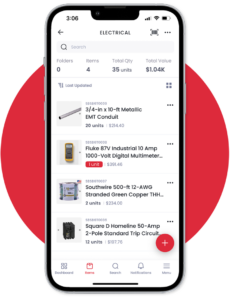
Automating your scheduling, billing, and client communication can transform your back office—but what about the inventory side of your service business?
When you deploy AI engines to optimize routes, forecast job costs, or streamline your operations, those systems all rely on one critical factor: clean data. If you feed any AI solution disorganized, outdated information about your field equipment, assets, and materials, it won’t give you smart results—it will just give you faster, automated errors.
Sortly is an inventory management solution that helps you manage inventory from any device, in any location. Sortly provides the real-time “ground truth” data your service business needs to scale safely. By making it incredibly easy for your team to scan QR codes, take photos of assets on job sites, and track consumable supplies in the field, Sortly ensures your physical operations match your digital records perfectly.
Learn more about how Sortly can transform your business and start your 14-day free trial today.